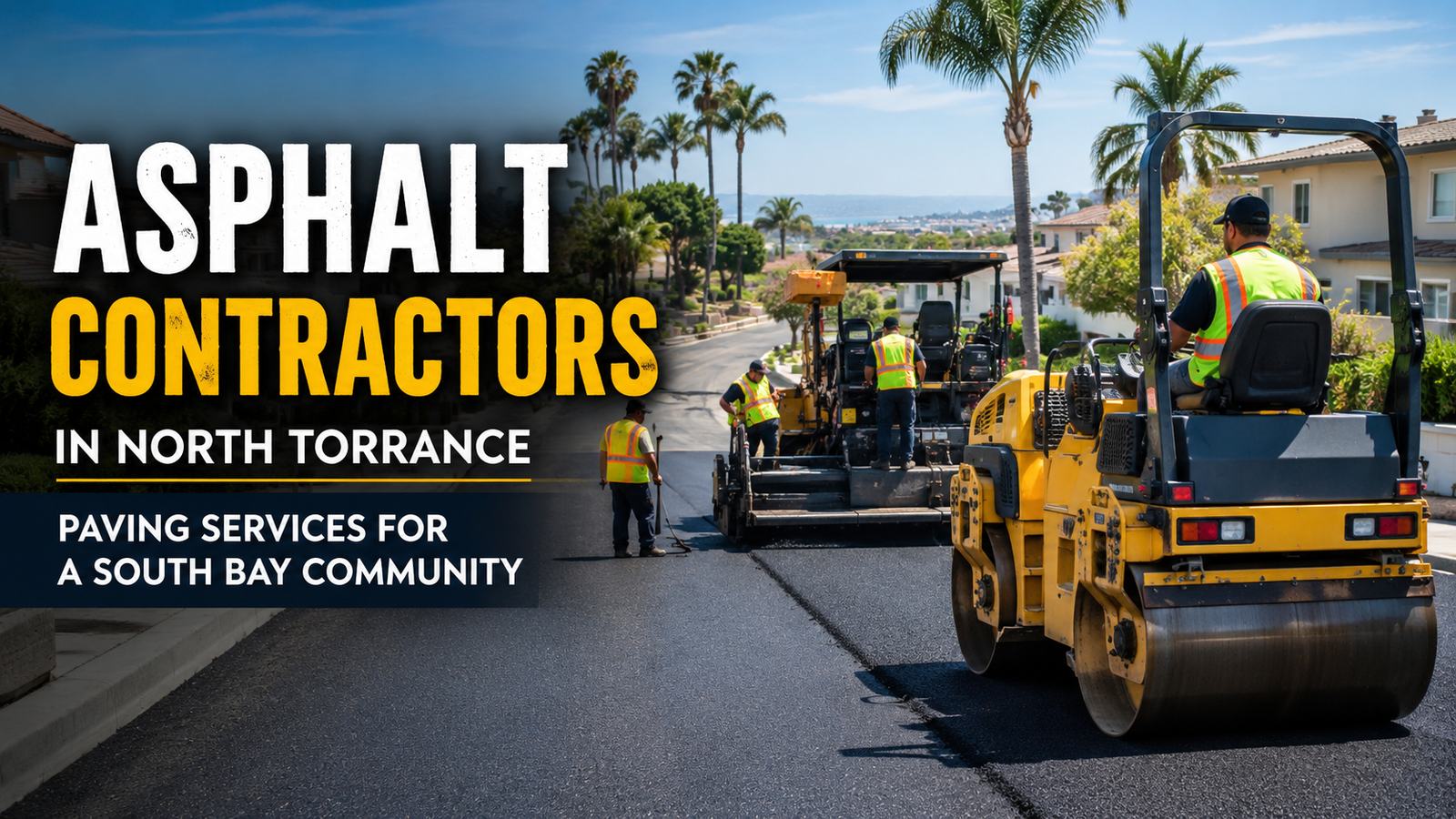
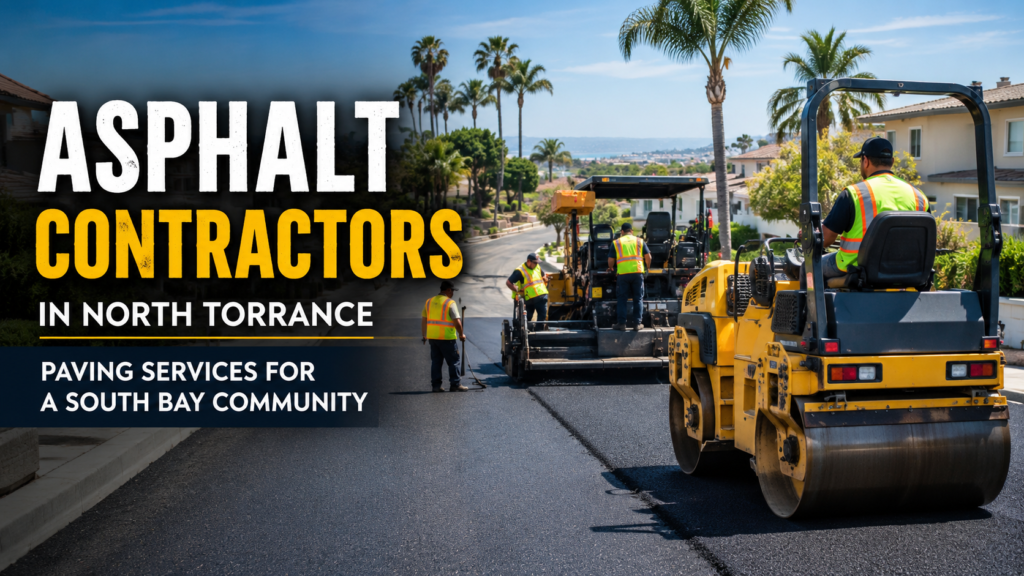
North Torrance is the northernmost section of Torrance one of the South Bay’s most established and well-developed cities, bordering Hawthorne, Gardena, Lawndale, and Redondo Beach. It encompasses a range of property types: established residential neighborhoods, commercial corridors, light industrial areas adjacent to the Del Amo area, and the busy retail and service zones near the Torrance-Hawthorne boundary. This diversity of property types creates correspondingly diverse demand for asphalt paving services, from residential driveways and private roads to commercial parking lots and light industrial yard areas. This guide explains what Asphalt Contractor North Torrance provide in North Torrance and what property owners in this South Bay community should know about maintaining their paved surfaces.
Southern California’s Climate and Asphalt Performance in North Torrance
North Torrance experiences the characteristic Southern California climate of Los Angeles County’s South Bay: mild temperatures year-round, meaningful influence from coastal marine layer especially in the morning months, minimal freeze-thaw cycling, and a distinct wet and dry season contrast. While these conditions are generally favorable for asphalt longevity compared to climates with harsh winters, they introduce specific deterioration mechanisms that Torrance property owners should understand.
UV radiation is the primary aging force for asphalt in Southern California. Los Angeles County receives abundant sunshine throughout the year, and UV radiation oxidizes the asphalt binder that holds aggregate particles together. Oxidized binder becomes hard and brittle, losing the flexibility that allows asphalt to accommodate thermal movement and minor deflection under traffic loads. Surface cracking from oxidized binder is the most visible early sign of asphalt aging in North Torrance driveways and parking lots.
Thermal expansion and contraction even without freeze-thaw cycling creates stress in asphalt surfaces. North Torrance’s temperature swings between marine-layer-cooled mornings and warm afternoon sun expose asphalt to daily thermal cycling that gradually opens and closes micro-cracks in the surface. The seasonal contrast between dry summer heat and wetter winter conditions accelerates this process, as water infiltrating existing cracks during winter rainfall events then drying out in summer creates freeze-thaw-like damage at a microscale level even without actual freezing.
Tree root intrusion is a notable asphalt deterioration factor in North Torrance’s established residential neighborhoods. The mature street trees that shade many North Torrance blocks have root systems that extend laterally far beyond their canopies, often beneath adjacent driveways and sidewalks. As roots increase in diameter over years and decades, they exert upward pressure that heaves and cracks asphalt, particularly at driveway edges near parkway trees.
Residential Paving in North Torrance
Residential asphalt driveways represent the most common paving project type in North Torrance’s established neighborhoods. The city’s housing stock spans several decades, and many driveways installed in the 1960s through 1990s are now showing the cumulative effects of UV oxidation, root pressure, and surface cracking that warrant resurfacing or replacement. A quality residential driveway in North Torrance should be designed with the local climate and soil conditions in mind: adequate aggregate base depth, appropriate mix design for the Southern California thermal environment, and edge detail that provides lateral support to prevent edge cracking.
The typical residential asphalt driveway installation process in North Torrance begins with removal of the existing surface (when replacement is called for) or cleaning and crack-filling preparation (when overlay is appropriate). Aggregate base is installed and compacted, the grade is set to drain water away from the garage and home foundation, and asphalt is placed and compacted. In Southern California, 3 inches of compacted asphalt over a 4-to-6-inch aggregate base is a common residential driveway section, though specific conditions may warrant adjustments.
Sealcoating is the most important preventive maintenance step for North Torrance homeowners. Applied every three to five years, a quality sealcoat fills surface micro-voids, slows UV-driven oxidation, and provides a fresh surface appearance. Homeowners who establish a regular sealcoating schedule can meaningfully extend the life of their asphalt driveways compared to those who never seal or wait until cracking has advanced before addressing it.
Commercial Paving in North Torrance
North Torrance’s commercial areas including the retail and service properties along Hawthorne Boulevard, Western Avenue, and the Torrance-Hawthorne corridor generate consistent demand for commercial parking lot paving and maintenance. Commercial lots in this area experience higher traffic volumes and more demanding loading conditions than residential driveways, requiring thicker pavement sections and more aggressive maintenance programs.
Commercial parking lot resurfacing through mill-and-overlay is the most common commercial paving project in North Torrance. When a lot’s surface has deteriorated through cracking, surface raveling, and spot failures but the base remains structurally sound, a professional asphalt contractor can mill the surface to a consistent depth (typically 1.5 to 2 inches) and apply new hot mix asphalt to restore a smooth, functional surface. This approach is more cost-effective than full replacement and provides a longer-lasting result than simple overlay without milling.
ADA compliance is an active requirement for North Torrance commercial properties. California’s Title 24 accessibility standards and federal ADA requirements mandate accessible parking space dimensions, slope requirements, access aisle widths, and pathways from accessible parking to building entrances. Asphalt contractors working in Torrance understand the City’s enforcement priorities and design their commercial paving projects to meet current accessibility requirements.
Common Questions About Asphalt Contractors in North Torrance
How long should an asphalt driveway last in North Torrance? A properly installed and maintained asphalt driveway in the South Bay can last 25 to 30 years. The combination of Southern California’s relatively mild climate (no freeze-thaw cycling) and a consistent sealcoating and maintenance program supports longevity well beyond the typical 15-to-20-year baseline for unmaintained asphalt.
Can tree roots near my North Torrance driveway be addressed during paving? Yes. During driveway replacement or resurfacing, root pruning, root barrier installation, or in some cases tree removal (with appropriate City of Torrance permits for protected species) can address the underlying cause of root damage. Simply paving over root intrusion without addressing the roots will result in recurrence of the same damage.
What is the best asphalt mix for North Torrance’s climate? Southern California asphalt producers formulate mixes for the region’s thermal and traffic conditions. Polymer-modified binders which incorporate polymer additives that improve flexibility at low temperatures and stiffness at high temperatures provide better long-term performance in the South Bay’s thermal cycling environment than standard unmodified binders.